Letting Go: The Path Beyond Opinion
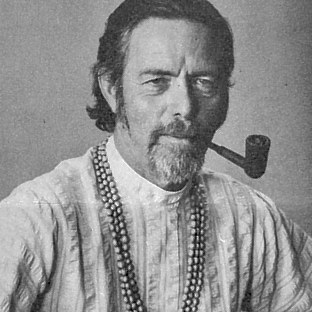
In the profound words of Alan Watts, "Do not seek truth. Stop holding opinions." This statement invites us to reconsider our relationship with truth and the opinions we cling to. In a world saturated with information and competing narratives, the challenge lies not just in discerning what is true, but in recognizing how our attachments to opinions can cloud our understanding. This teaching is not merely philosophical; it is a call to liberation from the confines of our own minds, urging us to embrace a more fluid and open approach to existence.
Watts's assertion resonates deeply within the Zen tradition, where the essence of enlightenment often hinges on the relinquishment of fixed beliefs and the embrace of impermanence. By encouraging us to abandon the pursuit of truth as a goal, he invites us to engage with life more authentically, free from the burdens of judgment and preconceived notions. This perspective is vital, as it opens the door to a more profound experience of reality, one that is unencumbered by the weight of our opinions and the fear of being wrong.
The image / the metaphor
At first glance, Watts's quote presents a paradox: how can one not seek truth? The imagery here is striking; it evokes a sense of stillness and surrender. The verbs "seek" and "stop holding" suggest a dynamic interplay between action and inaction. To seek implies a relentless pursuit, often leading to frustration and confusion, while to stop holding indicates a release, a letting go of the tight grip we have on our beliefs. This felt sense of release is akin to dropping a heavy load, allowing us to move more freely through life.
In the speaker's tradition
Alan Watts's teachings are deeply rooted in the Zen tradition, which emphasizes the importance of direct experience over intellectual understanding. Concepts such as *sunyata* (emptiness) and *prajna* (wisdom) resonate with his call to stop holding opinions. In Zen, the realization of emptiness allows for a profound understanding that transcends dualistic thinking, leading to a state of awareness where truth is not something to be grasped but experienced. This aligns with the idea of *kenosis*, or self-emptying, where one sheds the ego's attachments to beliefs and opinions, creating space for a deeper connection with the world.
In his work, Watts often references the *Tao Te Ching*, a foundational text in Taoism that shares many parallels with Zen thought. The Taoist principle of *wu wei*, or effortless action, echoes the sentiment of Watts's quote. By not striving for truth and instead allowing life to unfold naturally, we align ourselves with the flow of existence, experiencing a deeper sense of harmony and understanding. This perspective invites us to embrace the mystery of life rather than confine it within the rigid structures of our opinions.
Living the teaching
Consider a modern scenario where this teaching can be applied: a heated discussion about politics. In such moments, opinions can become entrenched, leading to conflict and division. By embodying Watts's teaching, one might choose to step back from the fray, recognizing that the pursuit of being right often obscures the deeper truths of shared humanity. Instead of clinging to a particular viewpoint, one can engage in a dialogue that seeks understanding rather than victory, fostering connection and empathy.
Another application of this teaching can be found in personal relationships. Imagine a moment of disagreement with a loved one, where opinions clash and emotions run high. By practicing non-clinging, one can approach the situation with openness, allowing for vulnerability and the possibility of reconciliation. Rather than holding tightly to one's perspective, the act of letting go can create space for compassion and understanding, transforming conflict into an opportunity for deeper connection.
A reflection
As we contemplate Watts's profound invitation to "stop holding opinions," we are called to examine our own attachments. What beliefs or opinions are we clinging to that may be hindering our ability to experience life fully? In this moment of reflection, consider: how might your life change if you approached each situation with a sense of openness, free from the need to be right? This question invites us to explore the transformative power of letting go, inviting a deeper engagement with the present moment.



Join the BrightStar Community
Stay connected with daily inspiration, event announcements, and community wisdom