The Path of Understanding: Embracing the Way
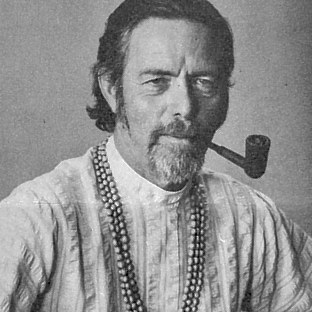
Alan Watts's assertion, "The way is the way," invites us to reflect on the nature of existence and the journey we undertake in life. This statement, while seemingly tautological, holds profound implications for our understanding of the Tao and the essence of our experiences. It challenges us to recognize that the path we walk is not merely a means to an end but an integral part of our being, a continuous unfolding of the self within the greater cosmos. In a world often obsessed with destinations and outcomes, this teaching beckons us to embrace the journey itself as a sacred practice.
Delving deeper, we find that Watts's words resonate with the core principles of Zen philosophy, where the act of being present is paramount. The "way" signifies not just a physical path but also the mental and spiritual journey we navigate. It emphasizes the importance of surrendering to the flow of life, acknowledging that each moment is a step along the path. This perspective invites us to cultivate mindfulness, to engage fully with our experiences, and to recognize that the essence of our lives is found in the very act of living, rather than in the pursuit of external goals.
The image / the metaphor
At first glance, the phrase "the way is the way" may appear to be a simple repetition, yet it is rich with imagery and meaning. The word "way" evokes a sense of direction, a path that one follows, while simultaneously suggesting a state of being. This duality captures the essence of the Tao, which is often described as a flowing river or a winding path that cannot be fully grasped or defined. The verbs inherent in this phrase—"is" and "the way"—speak to a state of existence that transcends linear thinking, inviting us to experience life as an ongoing process rather than a series of isolated events.
Moreover, this metaphor extends beyond mere words; it embodies a lived experience. The "way" is not a fixed route but a dynamic interplay of choices, actions, and reactions that shape our reality. It encourages us to see life as an intricate dance, where each step is both a destination and a departure. In this light, the journey becomes a tapestry woven from the threads of our experiences, each moment contributing to the larger picture of who we are and who we are becoming.
In the speaker's tradition
Alan Watts, a prominent figure in the popularization of Eastern philosophy in the West, draws heavily from the rich traditions of Zen and Taoism. His teachings often emphasize concepts such as dharma, the natural order of the universe, and sunyata, the emptiness that allows for the fullness of existence. In this context, "the way is the way" can be seen as an invitation to align oneself with the flow of the Tao, recognizing that our individual paths are expressions of a greater cosmic rhythm. This alignment fosters a sense of harmony and interconnectedness, allowing us to navigate life's complexities with grace.
In his work "Tao: The Watercourse Way," Watts articulates the idea that the Tao is not a rigid doctrine but a fluid, ever-changing reality. He draws parallels between the Tao and the concept of kenosis, the self-emptying of the self to allow for the divine to flow through. This notion resonates deeply with the essence of "the way is the way," suggesting that by relinquishing our need for control and certainty, we can fully engage with the present moment and discover the profound wisdom inherent in our experiences.
Living the teaching
Consider a modern scenario where this teaching can be applied: a person navigating the complexities of a career change. Often, individuals become fixated on the end goal—a new job, a promotion, or a sense of fulfillment—leading to anxiety and frustration. By embracing the idea that "the way is the way," one can shift focus from the destination to the journey itself. This perspective encourages them to engage fully with the process of exploration, learning, and growth, recognizing that each step taken is valuable in its own right, regardless of the outcome.
In relationships, this teaching can manifest in moments of conflict or misunderstanding. When faced with challenges, individuals may become entrenched in their perspectives, seeking to "win" the argument or prove their point. However, by embodying the principle that "the way is the way," one can approach these situations with openness and curiosity. This shift allows for deeper communication and connection, transforming conflict into an opportunity for growth and understanding, ultimately enriching the relationship.
A reflection
As we contemplate the depth of Alan Watts's assertion, we are invited to ask ourselves: How can I embrace the journey of my life as a sacred path? This question encourages us to reflect on our daily experiences, recognizing that each moment holds the potential for insight and transformation. By shifting our focus from the pursuit of external goals to the richness of the present, we can cultivate a deeper sense of peace and fulfillment, allowing the way to reveal itself in all its beauty.



Join the BrightStar Community
Stay connected with daily inspiration, event announcements, and community wisdom