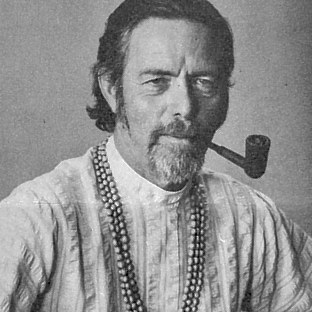
The Breath of Existence: Unraveling Life's Drama
Alan Watts profoundly states, "The whole drama of life is contained in one breath." This assertion invites us to consider the intricate tapestry of existence, suggesting that within the simplicity of a single breath lies the entirety of our experiences, emotions, and interactions. The stakes of this insight are high; it challenges us to recognize the significance of the present moment and the depth of our being, urging us to embrace the fullness of life rather than merely skimming its surface.
In a world often characterized by frenetic activity and distraction, Watts' words serve as a gentle reminder of the power inherent in stillness and awareness. The act of breathing, something we often take for granted, becomes a portal to understanding the complexities of our existence. By focusing on our breath, we can cultivate a deeper connection to ourselves and the world around us, revealing the drama of life that unfolds in each inhalation and exhalation.
The image / the metaphor
At first glance, the imagery in Watts' quote is deceptively simple. The word "drama" evokes a sense of narrative, suggesting that life is a performance filled with various acts, characters, and emotions. The verb "contained" implies that this drama is not scattered or chaotic but rather encapsulated within the singular act of breathing. This notion invites us to explore the profound relationship between breath and existence, where each breath serves as a reminder of our vitality and the transient nature of life.
Diving deeper into the metaphor, we can see that breath symbolizes more than just a physiological process; it represents the essence of life itself. Each breath is a moment of creation and dissolution, a cycle of receiving and releasing. In this way, Watts encourages us to recognize that within the simplicity of breathing lies the complexity of our experiences—joy, sorrow, love, and loss—all interwoven into the fabric of our being. The drama of life, then, is not merely a series of events but a rich tapestry woven from the threads of our breath.
In the speaker's tradition
Alan Watts, a prominent figure in the popularization of Eastern philosophy in the West, draws heavily from Zen Buddhism and its teachings. Central to Zen is the concept of "sunyata," or emptiness, which invites practitioners to recognize the impermanence of all things. In this context, Watts' emphasis on breath aligns with the Zen practice of mindfulness, where awareness of the present moment allows us to experience life fully. The breath becomes a bridge to understanding the nature of existence, revealing the interconnectedness of all beings.
Moreover, Watts' insights resonate with the notion of "kenosis," or self-emptying, found in various spiritual traditions. This idea encourages us to let go of our attachments and preconceptions, allowing us to experience life as it is, rather than how we wish it to be. In his work, Watts often references the Tao Te Ching, where Lao Tzu speaks of the importance of simplicity and returning to the source. Just as the breath connects us to the present, these teachings remind us to embrace the flow of life, surrendering to its inherent drama.
Living the teaching
Consider a modern scenario where the teaching of Watts might resonate: a busy professional caught in the whirlwind of deadlines and responsibilities. In the midst of this chaos, taking a moment to pause and breathe can transform the experience. By consciously inhaling and exhaling, the individual can cultivate a sense of presence, allowing the weight of stress to dissipate. This simple act of breathing becomes a powerful tool for grounding oneself, revealing that even in the most hectic moments, the drama of life can be navigated with grace and awareness.
In the realm of relationships, Watts' teaching can also find profound application. Imagine a couple facing a difficult conversation, where emotions run high and misunderstandings abound. By focusing on their breath, they can create a space of calm amidst the tension. This practice not only fosters better communication but also deepens their connection, as they learn to listen and respond from a place of awareness rather than reactivity. In this way, the breath serves as a reminder of the shared human experience, allowing the couple to navigate their drama with compassion and understanding.
A reflection
As we contemplate Watts' assertion that "the whole drama of life is contained in one breath," we are invited to reflect on our own relationship with breath and presence. How often do we rush through our days, neglecting the simple yet profound act of breathing? In what ways can we cultivate a deeper awareness of our breath to enhance our experience of life? Consider these questions as you move through your day, allowing the breath to guide you back to the present moment and the rich tapestry of existence that unfolds within it.




Join the BrightStar Community
Stay connected with daily inspiration, event announcements, and community wisdom