The Art of Being Present: Embracing the Now
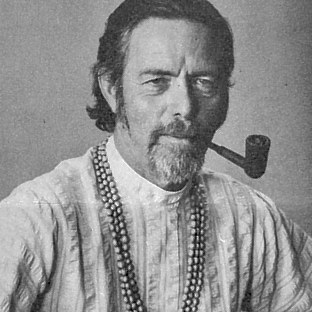
Alan Watts once articulated a profound truth: "To be fully alive, fully here, is to be fully nowhere else." This statement invites us to consider the essence of presence, suggesting that true vitality emerges only when we anchor ourselves in the present moment. In a world often characterized by distraction and fragmentation, this teaching serves as a gentle reminder of the importance of immersing ourselves in our immediate experience, rather than being lost in thoughts of the past or future. The stakes are high; our ability to engage deeply with life hinges on our capacity to be present.
Delving deeper into this notion, we recognize that being "fully alive" implies a richness of experience that transcends mere existence. It speaks to a state of awareness where we are not just physically present but also mentally and emotionally engaged with our surroundings. In this state, we cultivate a sense of aliveness that is vibrant and dynamic, allowing us to connect with ourselves and others in meaningful ways. The challenge lies in overcoming the habitual tendencies that pull us away from the now, urging us to explore how we can cultivate a more profound presence in our daily lives.
The image / the metaphor
At its core, Watts's quote evokes a vivid image of being anchored in the present moment, suggesting that our true essence can only be experienced when we are wholly engaged with our surroundings. The phrase "fully alive" conjures a sense of vitality and energy, while "fully here" emphasizes the importance of grounding ourselves in the now. The juxtaposition of "nowhere else" serves as a poignant reminder that our thoughts often wander, leading us to miss the richness of life unfolding before us. This imagery invites us to reflect on the ways we can cultivate a deeper connection to our immediate experience.
Going further into the metaphor, we can see that being "fully nowhere else" implies a kind of exclusion that is not negative but rather essential for genuine engagement. It suggests that to embrace the fullness of life, we must consciously choose to let go of distractions and the pull of past regrets or future anxieties. This act of exclusion is not about denying other aspects of our lives but rather about prioritizing the present moment as the fertile ground from which all experiences arise. In this way, Watts encourages us to recognize the beauty and depth that can be found in simply being here, now.
In the speaker's tradition
Alan Watts's teachings are deeply rooted in Zen philosophy, which emphasizes the importance of presence and mindfulness. Concepts such as *sunyata* (emptiness) and *dharma* (the path of truth) resonate with his assertion that being fully present allows us to experience the world without the distortions of our thoughts and judgments. In Zen, the practice of mindfulness invites practitioners to observe their thoughts and feelings without attachment, fostering a sense of clarity and connection to the present moment. This aligns with Watts's call to be "fully alive," as it encourages us to engage with life as it is, rather than how we wish it to be.
Moreover, Watts's insights can be compared to the teachings found in the *Heart Sutra*, which articulates the notion of emptiness and the interdependence of all things. The sutra reminds us that our perceptions are often clouded by dualistic thinking, leading us to miss the profound interconnectedness of existence. By embracing the present moment, as Watts suggests, we can begin to dissolve these barriers and experience the world with fresh eyes, free from the constraints of our conditioned responses.
Living the teaching
Consider a modern scenario where this teaching resonates: a busy professional caught in the whirlwind of deadlines and meetings. In such a context, the challenge of being present becomes palpable. The individual may find themselves physically in a meeting but mentally preoccupied with tasks yet to be completed or worries about future outcomes. By consciously choosing to focus on the present moment—listening actively, engaging with colleagues, and appreciating the dynamics of the discussion—they can cultivate a sense of aliveness that transforms their work experience from mere obligation to meaningful engagement.
In a different application, think of a relationship where one partner feels neglected due to the other's preoccupation with external distractions, such as smartphones or work commitments. By embodying Watts's teaching, the distracted partner can make a deliberate effort to be present during shared moments—setting aside devices, making eye contact, and truly listening. This practice not only enhances the quality of their interactions but also fosters a deeper emotional connection, allowing both individuals to feel more alive and engaged in their relationship.
A reflection
As we contemplate Watts's profound insight, we are invited to reflect on our own lives: In what ways do we allow ourselves to be fully present? What distractions pull us away from the richness of the now? By engaging with these questions, we can begin to uncover the barriers that inhibit our experience of aliveness and take steps toward embracing the fullness of each moment. Ultimately, the journey toward presence is a continuous practice, one that invites us to explore the depths of our existence with curiosity and openness.



Join the BrightStar Community
Stay connected with daily inspiration, event announcements, and community wisdom