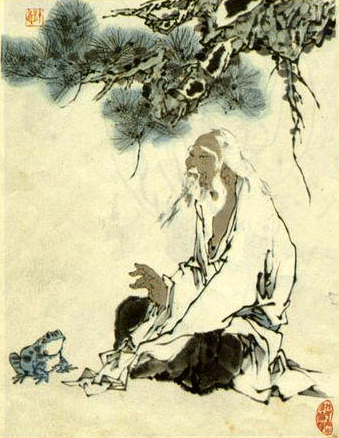
The Power of Non-Contention: A Path to Mastery
Chuang Tzu's assertion, "It is precisely because he does not contend that no one in the world can contend with him," invites us to explore the profound strength found in non-contention. This statement challenges the conventional understanding of power and mastery, suggesting that true strength lies not in aggressive competition but in a serene detachment from conflict. In a world often driven by rivalry and ambition, this perspective offers a refreshing lens through which we can examine our own lives and interactions.
As we delve deeper into this quote, we uncover layers of meaning that resonate with the essence of Taoist philosophy. Chuang Tzu, a pivotal figure in Taoism, emphasizes that the act of not contending is not a sign of weakness but rather a demonstration of profound inner strength and wisdom. This teaching encourages us to reconsider our approaches to challenges, relationships, and even our own self-perception, suggesting that the path to true mastery is paved with peace rather than strife.
The image / the metaphor
The imagery in Chuang Tzu's quote evokes a sense of calm and composure, where the individual stands unyielding against the tumult of the world. The phrase "does not contend" conjures a picture of someone who, rather than engaging in the fray, remains centered and grounded. This choice of words highlights the active decision to refrain from conflict, suggesting that such restraint is a powerful form of mastery. The felt sense here is one of tranquility, where the absence of contention creates a space for true strength to emerge.
In the speaker's tradition
Chuang Tzu's philosophy is deeply rooted in the principles of Taoism, which emphasizes harmony, balance, and the interconnectedness of all things. The concept of non-contention aligns closely with the Taoist understanding of wu wei, or "non-action," which advocates for a way of being that is in tune with the natural rhythms of life. This approach encourages individuals to let go of the ego-driven desire to compete and instead embrace a state of flow where actions arise spontaneously and effortlessly.
In the context of Chuang Tzu's teachings, we can draw parallels to the Buddhist concept of sunyata, or emptiness, which invites us to release attachments and preconceived notions. Just as sunyata encourages a letting go of the self, Chuang Tzu's non-contention invites us to dissolve the barriers that separate us from others. In both traditions, the path to enlightenment and mastery lies in relinquishing the need to assert oneself over others, fostering a sense of unity and peace.
Living the teaching
Consider a modern scenario where this teaching can be applied: a workplace filled with competition and ambition. In such an environment, individuals often feel pressured to outshine their colleagues, leading to stress and conflict. By embodying Chuang Tzu's principle of non-contention, one might choose to collaborate rather than compete, fostering a spirit of teamwork that ultimately enhances productivity and morale. This shift not only alleviates personal stress but also cultivates a more harmonious workplace atmosphere.
In personal relationships, the application of non-contention can be equally transformative. Imagine a disagreement with a loved one where both parties are entrenched in their positions. By choosing not to contend, one can approach the situation with empathy and understanding, prioritizing connection over the need to be right. This practice of non-contention can lead to deeper intimacy and trust, allowing both individuals to navigate their differences with grace and compassion.
A reflection
As we reflect on Chuang Tzu's profound insight, we might ask ourselves: "In what areas of my life am I engaging in unnecessary contention, and how might I embrace a more peaceful approach?" This contemplative question invites us to examine our interactions, both personal and professional, and consider how we can cultivate a sense of mastery through non-contention. By embracing this teaching, we open ourselves to a deeper understanding of ourselves and the world around us, fostering a life of peace and harmony.



Join the BrightStar Community
Stay connected with daily inspiration, event announcements, and community wisdom