"Spiral" explores the metaphor of spiraling as a model for consciousness and spiritual development—where repetition is not mere recurrence but advancement. Rather than circling endlessly in the same place, or climbing linearly upward, the spiral suggests that we encounter the same patterns, themes, and challenges at successive levels of depth and wisdom. This structure appears across nature, psychology, and contemplative practice, offering a framework for understanding how personal and collective evolution actually unfolds.
What Is the Spiral Pattern and Why Does It Matter?
The spiral is one of nature's most fundamental geometries, visible in galaxies, DNA helixes, hurricanes, shells, and plant growth. In spiritual and philosophical contexts, it serves as a corrective to two limiting models: the circle (which implies eternal return and stagnation) and the straight line (which implies naive progress without revisiting complexity). The spiral reconciles these: you do return to familiar terrain—old wounds, recurring doubts, similar relationship patterns—but you arrive there with new capacities, altered perspective, and deepened understanding.
Todd Boston's piece "Spiral" invites listeners to consider how growth actually feels in embodied experience. Many practitioners report that meditation, therapy, or inner work brings them back to the same emotional or psychological material repeatedly. Without the spiral framework, this can feel like failure—"I thought I resolved this." With it, revisiting old ground becomes evidence of authentic development: you are meeting the same depth at a higher turn of the spiral.
How Does the Spiral Differ From Linear Progress?
Western culture often equates growth with linear trajectory: learn a skill, master it, move on. In this model, emotion or old patterns that re-emerge signify regression. But contemplative traditions, embodied psychology, and systems thinking recognize that maturation is not unidirectional. The spiral model suggests that:
- Integration takes time. Insight alone does not transform behavior or belief. The spiral loops back because the nervous system, the body, and habit need repeated exposure to new awareness at different levels of development.
- Complexity increases with each loop. At thirty, you may encounter abandonment fears in romantic relationships; at fifty, the same fear shows up in different guises—fear of irrelevance, fear of losing mental capacity. Same spiral, higher turn, greater nuance.
- Context shapes meaning. A meditation insight available in silence may need to be re-learned in the midst of traffic, grief, or conflict. Each context is a turn of the spiral.
- Collective healing mirrors individual development. Just as individuals spiral through repetitive patterns with increasing awareness, cultures and societies do too—revisiting questions of justice, belonging, and meaning across generations, each time with more data, more voices, more accountability.
Where Do We See the Spiral in Daily Life?
The spiral is not abstract philosophy; it manifests in recognizable patterns. In recovery work, people often say they "return to step one" not because they failed but because they are now capable of deeper honesty, smaller self-deceptions, and more refined action. In parenting, you encounter your own parents' wounds again—not because you are destined to repeat them, but because you are now tasked with integrating and transforming them in a new role. In creative work, artists report revisiting the same themes, symbols, or narratives throughout their practice, each iteration richer and more coherent.
The spiral also appears in how societies address injustice. A nation may return to a moral question—slavery, gender equity, environmental responsibility—across centuries. Each historical return occurs with expanded moral vocabulary, more testimony, more evidence. This is not circular futility; it is spiral advancement, even when progress feels painfully slow.
What Role Does Awareness Play in the Spiral?
A critical distinction: the spiral is not automatic. You can circle endlessly without rising. The difference between circling and spiraling is consciousness. When you encounter the same pattern with the same level of unawareness, you remain at the same altitude. But when you encounter it with new tools—a different somatic capacity, a reframed belief, compassion instead of judgment—you ascend.
This is why contemplative practice, therapy, and genuine learning are so central to spiritual work. They are the mechanisms that convert repetition into spiral movement. Meditation does not eliminate the arising of old patterns; it adds awareness to the process. Therapy does not delete the original wound; it enlarges your capacity to metabolize it. Study does not replace experience; it contextualizes experience within a larger framework.
How Does the Spiral Relate to Hope?
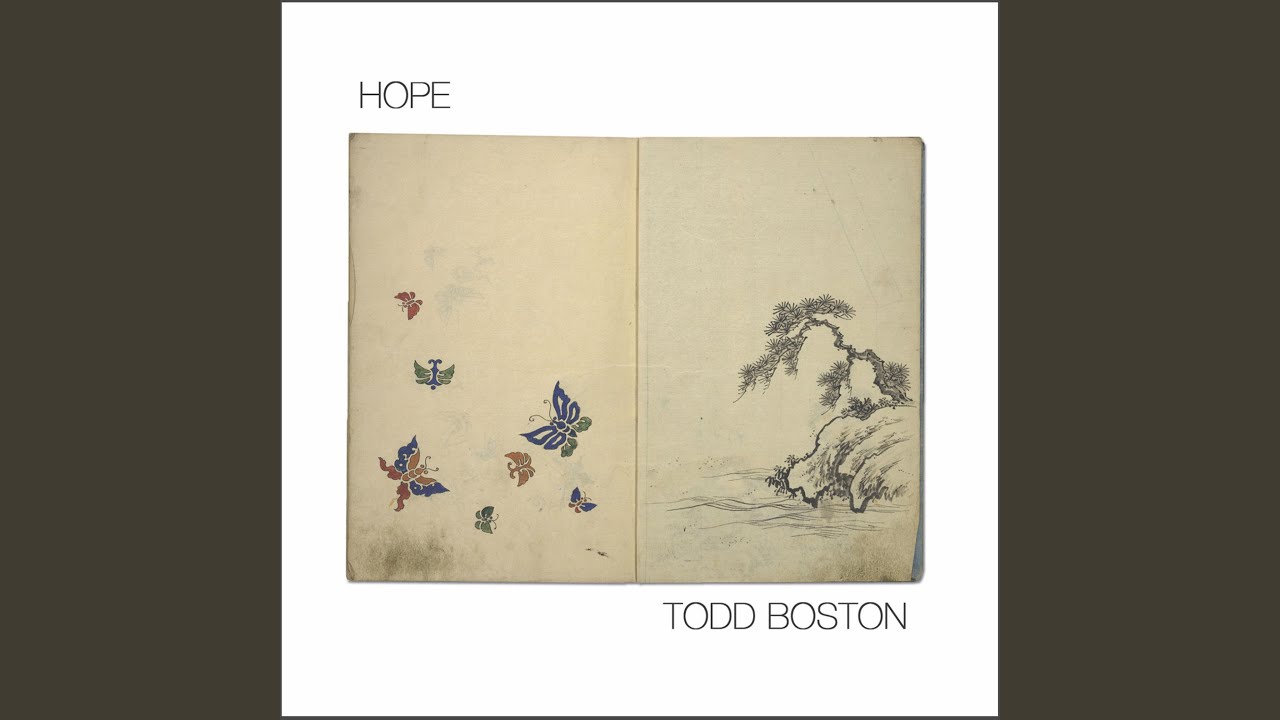
Boston's album, from which "Spiral" comes, is titled "Hope." This pairing is significant. The spiral model offers a specific form of hope—not the naive optimism that assumes linear improvement or permanent solutions, but the informed hope that recognizes cycles, honors complexity, and trusts in gradual transformation through persistent engagement.
This hope is resilient because it does not collapse when old material resurfaces. It acknowledges that deep change takes multiple passes, multiple contexts, multiple levels of the nervous system. It permits failure and return as part of the arc rather than deviation from it. In a culture of quick fixes and productivity obsession, the spiral model of hope says: yes, you will revisit this. And yes, you will be more capable when you do.
Where to Go From Here
To apply spiral thinking in your own practice: When you encounter a recurring emotion, belief, or pattern, pause before labeling it regression. Ask instead: Where am I now in my capacity to witness this? What new resources do I bring? What turn of the spiral is this? Experiment with revisiting practices, relationships, or questions not as unfinished business but as deepening spirals. Consider where in your life—personal, professional, relational—you are already moving in spirals without having named them. Notice how communities and institutions also move in spirals, and what conditions support the upward turn versus stagnation. Finally, explore how hope itself spirals: each cycle of difficulty met with awareness and compassion becomes material for a deeper, more textured hope.