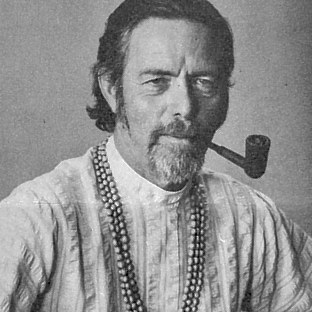
The Art of Continuous Renewal
Alan Watts invites us to consider the profound notion that "the art of life is to be born again, every moment." This statement encapsulates the essence of living with a sense of renewal, suggesting that each moment offers us an opportunity to shed the weight of our past and embrace the freshness of existence. In a world often dominated by routine and expectation, this perspective challenges us to engage with life as an ever-evolving canvas, where each brushstroke is a chance to redefine ourselves and our experiences.
To be "born again" in every moment is not merely a call to change but a deeper invitation to awaken to the present. It encourages us to recognize the transient nature of our thoughts, emotions, and circumstances. By embracing this fluidity, we can cultivate a sense of freedom that allows us to navigate life with grace and creativity. This perspective is vital in a society that often clings to fixed identities and past narratives, reminding us that the essence of life lies in its impermanence and the potential for transformation.
The image / the metaphor
The imagery in Watts's quote evokes a sense of rebirth, suggesting that life is not a linear journey but a series of cyclical experiences. The phrase "to be born again" conjures feelings of innocence and possibility, akin to the first light of dawn breaking over the horizon. The use of "every moment" emphasizes the immediacy of this renewal, urging us to recognize that each second is a fresh opportunity to engage with the world anew. This metaphor invites us to let go of preconceived notions and to approach life with a childlike wonder.
Diving deeper into this metaphor, we can see that the act of being reborn is not simply about change; it is about transformation at a fundamental level. It suggests a shedding of layers—old beliefs, fears, and attachments—that no longer serve us. In this way, Watts encourages us to embrace the fluidity of our identities, allowing ourselves to evolve continuously. This perspective aligns with the Zen understanding of impermanence, where each moment is seen as a unique expression of life, deserving of our full attention and appreciation.
In the speaker's tradition
Alan Watts, a prominent figure in the popularization of Eastern philosophies in the West, draws heavily from Zen Buddhism, which emphasizes the importance of living in the present moment. Central to this tradition is the concept of *sunyata*, or emptiness, which teaches that our identities and experiences are not fixed but rather fluid and interconnected. This understanding aligns with the idea of being "born again," as it encourages us to release our attachments to past identities and to embrace the ever-changing nature of existence. Additionally, the notion of *dharma*, or one's path in life, resonates with Watts's call to engage with each moment as a new beginning.
In his work, Watts often references the teachings of Zen masters, who emphasize the importance of mindfulness and presence. For instance, in the *Heart Sutra*, the essence of emptiness is articulated, reminding us that form and emptiness are interdependent. This text echoes Watts's sentiment, suggesting that by recognizing the transient nature of our experiences, we can cultivate a deeper understanding of ourselves and our place in the universe. The practice of mindfulness, therefore, becomes a pathway to experiencing this rebirth in every moment.
Living the teaching
Consider a modern scenario where this teaching can be applied: a hectic day at work filled with stress and deadlines. In such moments, it is easy to become overwhelmed by the weight of expectations and past experiences. However, by embracing the idea of being born again, one can pause, take a deep breath, and approach the situation with fresh eyes. This shift in perspective allows for a more creative and open response to challenges, transforming stress into an opportunity for growth and learning.
In the realm of relationships, the concept of renewal can be equally transformative. Imagine a conflict with a loved one that has lingered, creating tension and misunderstanding. By embodying the spirit of being reborn in that moment, one can choose to let go of past grievances and approach the conversation with openness and vulnerability. This willingness to engage anew fosters deeper connections and healing, illustrating how the art of life, as Watts suggests, is rooted in our capacity to renew ourselves and our relationships continually.
A reflection
As we contemplate Watts's profound insight, we might ask ourselves: How can I embrace the art of being born again in my daily life? This question invites us to reflect on the areas where we may be holding onto past narratives or identities that no longer serve us. By exploring this inquiry, we open ourselves to the possibility of transformation and renewal, allowing each moment to become a canvas for our authentic selves.



Join the BrightStar Community
Stay connected with daily inspiration, event announcements, and community wisdom