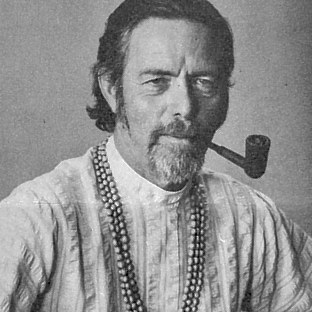
Embracing the Eternal Now: Alan Watts on Time
Alan Watts provocatively asserts that "the future is a concept — it doesn't exist. There is no such thing as tomorrow. There never will be, because time is always now." This statement invites us to reconsider our relationship with time, urging us to recognize that the future is merely a mental construct, a projection of our desires and fears. By anchoring ourselves in the present moment, we can liberate ourselves from the anxieties that often accompany our anticipation of what is to come. This realization is not just philosophical; it has profound implications for how we live our lives.
In a world that constantly pushes us to plan, predict, and prepare for tomorrow, Watts's words serve as a gentle reminder of the power of presence. The relentless pursuit of future goals can lead to a disconnection from the richness of the current moment. By acknowledging that the future is an illusion, we can cultivate a deeper appreciation for the here and now, allowing us to experience life more fully. This perspective is not merely an abstract idea; it is a transformative practice that can lead to greater peace and fulfillment.
The image / the metaphor
Watts's assertion that "the future is a concept" evokes a vivid image of time as a flowing river, where the past is upstream and the future is downstream, both of which are unreachable. The verbs "exist" and "will be" emphasize the static nature of the future as a mere idea, while "now" embodies the dynamic, ever-present reality of our experience. This imagery invites us to visualize time not as a linear path but as a vast ocean where the only moment we can truly inhabit is the present wave crashing upon the shore.
Delving deeper into the metaphor, we find that the notion of time as a construct challenges the very fabric of our understanding. Just as a mirage can deceive the thirsty traveler, the future can lure us into a state of longing and dissatisfaction. Watts encourages us to recognize that the present moment is not just a fleeting point in time but the entirety of our existence. By embracing this perspective, we can dissolve the barriers that separate us from the fullness of life, allowing us to engage with each moment as it unfolds.
In the speaker's tradition
Alan Watts's teachings are deeply rooted in Zen philosophy, which emphasizes the importance of mindfulness and the present moment. Concepts such as *sunyata* (emptiness) and *prajna* (wisdom) resonate with his assertion that the future is an illusion. In Zen, the practice of being fully present is seen as a pathway to enlightenment, where one can experience the interconnectedness of all things. This understanding aligns with the idea that clinging to the future can lead to suffering, as it distracts us from the inherent beauty of the now.
Watts's insights can also be compared to the teachings found in the *Dhammapada*, where the Buddha emphasizes the significance of living in the present. The text states, "Do not dwell in the past, do not dream of the future, concentrate the mind on the present moment." This parallel reinforces the timeless wisdom that transcends cultural boundaries, inviting seekers to cultivate awareness and presence as a means of liberation from the constraints of time.
Living the teaching
Consider a modern scenario where this teaching resonates: the hustle and bustle of daily life, filled with deadlines, responsibilities, and the constant pressure to plan for the future. In such a context, it is easy to become overwhelmed, losing sight of the present moment. By consciously practicing mindfulness—taking a few deep breaths, observing our surroundings, or simply pausing to appreciate the sensations of the moment—we can anchor ourselves in the now. This practice not only alleviates stress but also enhances our ability to engage with life more fully.
In relationships, the teaching of living in the now can be transformative. Imagine a conversation where one partner is preoccupied with past grievances or future worries, creating a barrier to genuine connection. By consciously choosing to be present, both partners can cultivate a deeper understanding and intimacy. This practice of presence fosters compassion and empathy, allowing for a richer, more authentic exchange that honors the essence of each individual in the relationship.
A reflection
As we contemplate Watts's profound assertion that "time is always now," we are invited to reflect on our own relationship with time. How often do we find ourselves caught in the web of future anxieties or past regrets? In what ways can we cultivate a deeper awareness of the present moment in our daily lives? By engaging with these questions, we can begin to unravel the layers of our experience, discovering the beauty and richness that exists when we fully embrace the now.



Join the BrightStar Community
Stay connected with daily inspiration, event announcements, and community wisdom