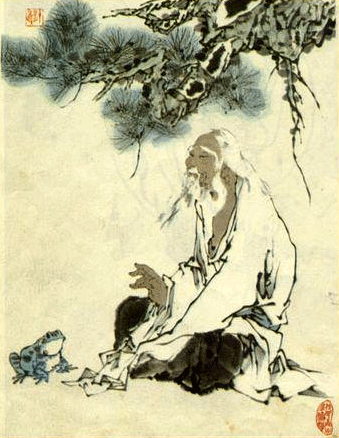
The Wisdom of Letting Go
Chuang Tzu's assertion that "the sage does not store up" invites us to reconsider our relationship with possessions and the very act of accumulation. In a world that often equates success with material wealth and security, this statement challenges us to embrace a more fluid existence, one that prioritizes experience and connection over ownership. The stakes are high; by clinging to what we possess, we risk losing sight of the deeper currents of life that flow through us and around us.
This teaching resonates profoundly in a culture that often glorifies hoarding—whether it be physical objects, knowledge, or emotional attachments. Chuang Tzu's wisdom suggests that true fulfillment lies not in the accumulation of resources but in the ability to engage with the world as it is, moment by moment. This perspective encourages us to cultivate a sense of openness and trust in the natural flow of life, allowing us to experience the richness of existence without the burdens of attachment.
The image / the metaphor
The imagery of a sage who does not store up evokes a sense of lightness and freedom. The verbs "does not" and "store up" imply a conscious choice to refrain from hoarding, suggesting an active engagement with the present rather than a passive accumulation of the past. This creates a felt sense of spaciousness, where the sage moves through life unencumbered by the weight of possessions, embodying a state of being that is both serene and dynamic.
In the speaker's tradition
Chuang Tzu's teaching is deeply rooted in the Taoist tradition, which emphasizes the importance of non-attachment and the natural flow of life. Concepts such as wu wei and sunyata resonate with the idea that true wisdom lies in letting go of the need to control or possess. In Taoism, the sage embodies the ideal of living in harmony with the Tao, the fundamental principle that underlies and unites all things. This perspective encourages us to trust in the unfolding of life rather than striving to hold onto it.
In the text of the Zhuangzi, we find numerous anecdotes illustrating the life of the sage, who navigates the world with a sense of detachment and humor. One such story involves a butcher who, through his skill and understanding of the natural order, is able to carve meat effortlessly, demonstrating the harmony between his actions and the flow of life. This narrative serves as a reminder that when we align ourselves with the natural rhythms of existence, we too can experience a sense of ease and fulfillment.
Living the teaching
Consider a modern scenario where this teaching might resonate: a professional caught in the relentless pursuit of career advancement. This individual may find themselves accumulating accolades, titles, and material wealth, yet feeling increasingly disconnected from their true self and the joy of their work. By embracing Chuang Tzu's wisdom, they might begin to shift their focus from external validation to internal fulfillment, allowing their passion and creativity to guide their actions rather than the desire for recognition.
In the realm of relationships, the teaching of non-attachment can also be transformative. Imagine a friendship that has become strained due to expectations and possessiveness. By embodying the sage's approach of not storing up emotional grievances or demands, both individuals can cultivate a space of openness and acceptance. This shift allows for a deeper connection, where love and understanding can flourish without the weight of past grievances or the fear of loss, embodying a more profound sense of freedom and joy.
A reflection
As we contemplate Chuang Tzu's profound insight that "the sage does not store up," we are invited to reflect on our own lives. What are the possessions, emotions, or expectations that we cling to, and how do they shape our experience of the present moment? In this spirit of inquiry, consider this contemplative question: How might your life change if you embraced a mindset of non-attachment, allowing yourself to flow with the currents of existence rather than holding tightly to what you think you need?



Join the BrightStar Community
Stay connected with daily inspiration, event announcements, and community wisdom