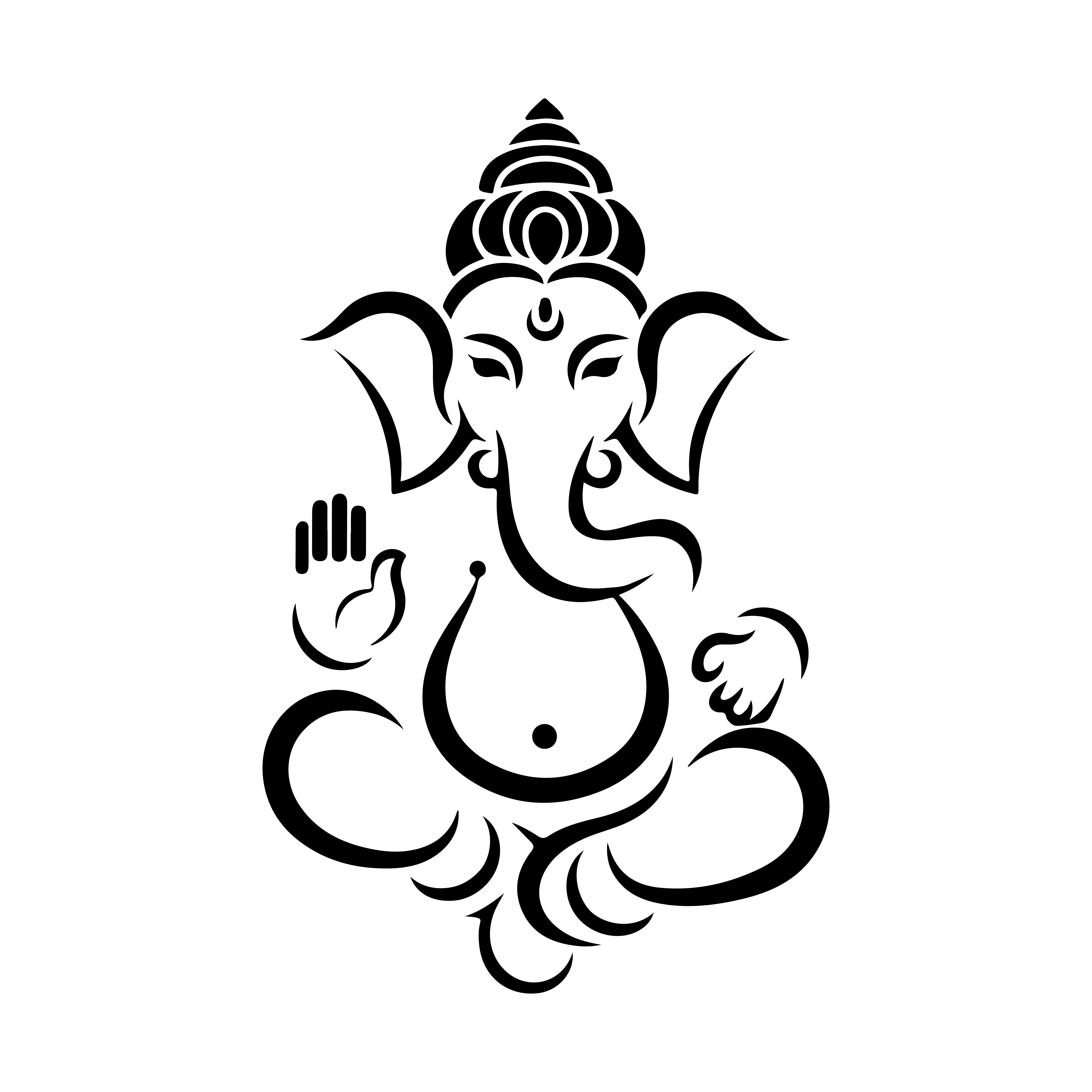
The Union of Being: A Journey into Oneness
Swami Satchidananda's profound assertion that "In meditation, the meditator, the meditation, and the object of meditation become one" invites us to explore the transformative power of meditation. This statement encapsulates the essence of a deeply integrative experience where the boundaries between self, practice, and the focus of our contemplation dissolve. Understanding this union is crucial, as it reveals the potential for profound inner peace and clarity that arises when we fully immerse ourselves in the meditative process.
At its core, this quote speaks to the heart of spiritual practice, where the act of meditation transcends mere technique and becomes a pathway to unity with the universe. In a world often marked by fragmentation and distraction, the promise of becoming one with our meditation offers a sanctuary of wholeness. This journey into oneness is not just a mystical experience; it is a practical invitation to cultivate a deeper awareness of our interconnectedness with all that exists.
The image / the metaphor
Swami Satchidananda's words evoke a vivid imagery of merging, where the meditator, the act of meditation, and the object of focus are not separate entities but rather threads woven into a single tapestry of existence. The use of the word "become" suggests a dynamic process, one that unfolds as we engage in meditation. This imagery invites us to envision a river flowing seamlessly into the ocean, where distinctions blur and the essence of both is enriched by the union.
Delving deeper into this metaphor, we can perceive the meditator as the seeker of truth, the meditation as the method of exploration, and the object of meditation as the ultimate reality or divine presence. This triad reflects the holistic nature of spiritual practice, where each element is interdependent. The felt sense of this union is one of liberation; it is the realization that our individual consciousness is not isolated but part of a greater whole, echoing the teachings found in various spiritual traditions.
In the speaker's tradition
Swami Satchidananda's teachings are rooted in the tradition of integral yoga, which emphasizes the harmonious integration of body, mind, and spirit. Concepts such as dharma, or one's rightful path, and bhakti, the path of devotion, resonate deeply within this framework. The notion of samadhi, or the state of meditative absorption, is particularly relevant here, as it represents the culmination of the meditative journey where the practitioner experiences a profound sense of unity with the divine.
In the Yoga Sutras of Patanjali, the idea of oneness is further explored through the concept of prajna, or wisdom, which emerges when the mind is still and focused. This stillness allows for the dissolution of the ego, leading to a state of sunyata, or emptiness, where the meditator can experience the fullness of existence without the constraints of individual identity. Such teachings underscore the importance of surrendering the self in order to embrace the greater reality, a theme that resonates throughout the integral yoga tradition.
Living the teaching
Consider a modern scenario where an individual sits down to meditate amidst the chaos of daily life. Initially, they may feel fragmented, their thoughts racing and their attention divided. However, as they settle into their practice, a shift occurs; they begin to let go of the distractions and immerse themselves in the present moment. In this space, the meditator, the act of meditation, and the breath become one, creating a profound sense of peace and clarity that can transform their entire day.
This teaching can also manifest in interpersonal relationships. Imagine a moment of conflict where two individuals are entrenched in their perspectives, unable to find common ground. By applying the principle of oneness, they can approach the situation with a meditative mindset, seeking to understand rather than to be understood. In doing so, they dissolve the barriers of ego and judgment, allowing for a deeper connection that transcends their differences and fosters compassion and empathy.
A reflection
As we contemplate Swami Satchidananda's insight, we are invited to reflect on our own experiences of unity in meditation and daily life. How often do we find ourselves fully present, merging with our practice and the world around us? In what ways can we cultivate this sense of oneness in our interactions and pursuits? Allow these questions to guide your contemplation, as they may reveal pathways to deeper understanding and connection.