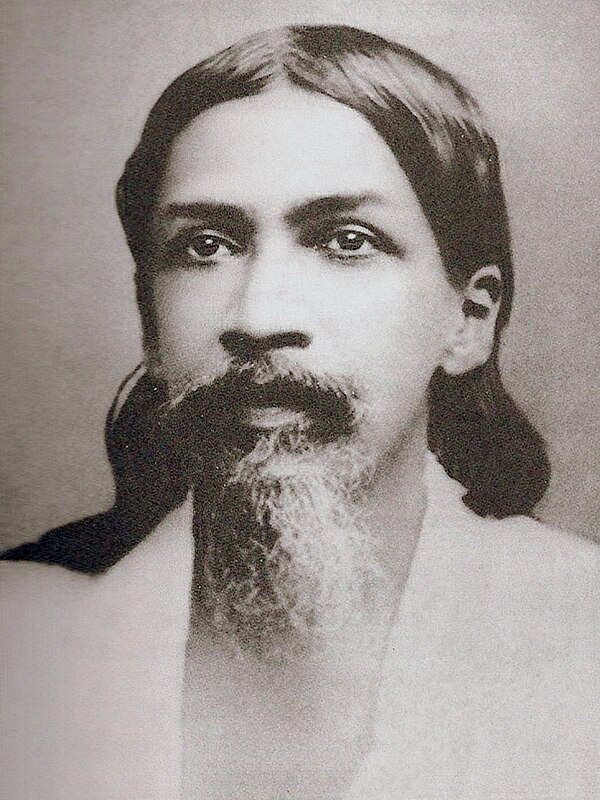
Embracing the Now: A Journey Through Doubt and Faith
Sri Aurobindo's poignant assertion, "Doubt the past, mistrust the future, but live in the present with hope and faith," invites us to navigate the complexities of existence with a discerning heart. In a world often clouded by regret and anxiety, this quote serves as a compass, guiding us toward the sanctuary of the present moment. The stakes are high; our ability to cultivate a meaningful life hinges on how we relate to time itself. By anchoring ourselves in the now, we can foster resilience and nurture a hopeful spirit, essential for personal and collective growth.
As we delve deeper into Aurobindo's wisdom, we uncover a profound invitation to embrace the present as a fertile ground for transformation. The act of doubting the past and mistrusting the future does not imply a denial of their existence; rather, it encourages a conscious disengagement from the burdens they often impose. In this light, living in the present becomes an act of defiance against the weight of history and the uncertainty of what lies ahead. It is a call to cultivate hope and faith, not as abstract ideals, but as lived experiences that can illuminate our path forward.
The image / the metaphor
The imagery within Aurobindo's quote is rich and evocative, painting a vivid picture of our relationship with time. The verbs "doubt" and "mistrust" suggest a critical engagement with our past and future, urging us to question the narratives we have constructed around them. The present, in contrast, is portrayed as a realm of possibility, where hope and faith can flourish. This juxtaposition creates a dynamic tension, inviting us to actively participate in our own lives rather than passively allowing time to dictate our experiences.
Diving deeper into this metaphor, we can see that Aurobindo is not merely advocating for a passive acceptance of the present. Instead, he is calling for an active engagement with the now, where hope and faith become tools for transformation. The present moment is depicted as a canvas, inviting us to paint our lives with intention and purpose. By cultivating a sense of presence, we can transcend the limitations imposed by our past and future, allowing us to experience life in its fullness.
In the speaker's tradition
Situated within the rich tapestry of Hindu philosophy, Aurobindo's quote resonates with several key concepts, such as dharma and bhakti. Dharma, or one's duty, emphasizes the importance of living in accordance with one's true nature, which can only be realized in the present moment. Similarly, bhakti, or devotion, encourages a deep connection to the divine that transcends temporal concerns. In this context, Aurobindo's call to live in the present aligns with the broader Hindu understanding of existence as a sacred journey, where each moment holds the potential for spiritual awakening.
Moreover, Aurobindo's insights echo the teachings found in the Bhagavad Gita, where Lord Krishna advises Arjuna to focus on his duty without attachment to the fruits of his actions. This notion of selfless action in the present moment is a cornerstone of the Gita's philosophy, reinforcing the idea that true fulfillment arises from living authentically in the now. By embracing this perspective, we can cultivate a sense of peace and purpose that transcends the dualities of past regrets and future anxieties.
Living the teaching
Consider a modern scenario where this teaching can be applied: a professional grappling with the weight of past failures and future uncertainties. In such a situation, the individual may find themselves paralyzed by self-doubt, unable to take decisive action. By embracing Aurobindo's wisdom, they can shift their focus to the present moment, recognizing that each new day offers a fresh opportunity to learn and grow. This shift in perspective can empower them to approach their work with renewed vigor, fostering resilience and creativity.
In the realm of relationships, Aurobindo's teaching can also provide profound insights. Imagine a couple facing challenges rooted in past grievances and future fears. By consciously choosing to live in the present, they can cultivate a space of openness and vulnerability, allowing for authentic communication and connection. This practice of presence not only deepens their bond but also nurtures a shared sense of hope and faith in their journey together, reinforcing the idea that love flourishes in the here and now.
A reflection
As we contemplate Aurobindo's invitation to "live in the present with hope and faith," we are called to examine our own relationship with time. What burdens from the past do we carry that weigh us down, and how do our fears about the future shape our present experiences? In this moment of reflection, let us ask ourselves: How can I cultivate a deeper sense of presence in my daily life, allowing hope and faith to guide my actions and choices?